
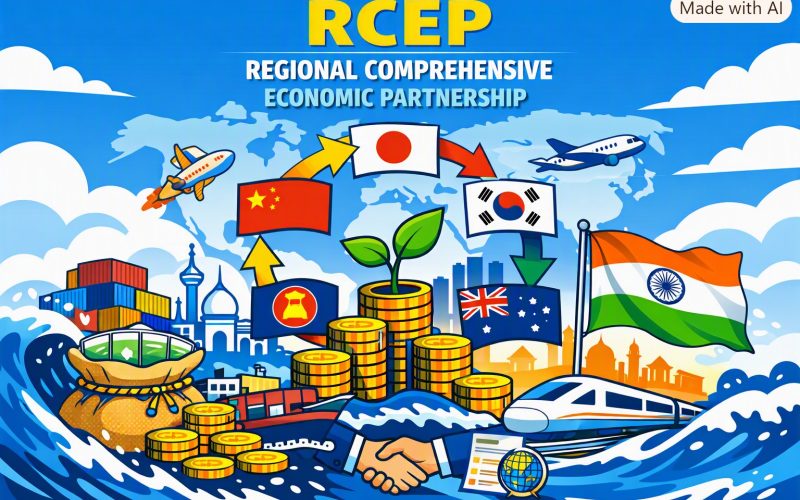
Strategic imperative for India economic future
The Regional Comprehensive Economic Partnership (RCEP) represents a significant milestone in regional economic integration. As the world's largest free trade agreement, it encompasses 15 countries, including China, Japan, South Korea, and the ten ASEAN member states. India's decision to withdraw from the RCEP negotiations in 2019 has been a subject of considerable debate. Given the evolving global economic landscape and India's strategic interests, a re-examination of its stance on RCEP is warranted.
Economic Implications of RCEP Membership
RCEP offers India several potential economic advantages.
Preferential Market Access
It provides preferential market access to a vast consumer base of over 2.2 billion people. This can significantly boost exports, create jobs, and stimulate domestic economic growth.
Foreign Direct Investment
The agreement can attract foreign direct investment (FDI), leading to technology transfer, knowledge sharing, and job creation.
Smoother Supply Chains
RCEP can facilitate smoother supply chains, reducing trade costs and enhancing competitiveness.
Deeper Regional Integration
It can help India integrate more deeply into the regional value chains, enhancing its economic resilience.
Addressing Concerns and Mitigating Risks
While RCEP presents significant opportunities, it also raises concerns. Critics argue that the agreement could lead to increased competition from imports, potentially harming domestic industries. Furthermore, there are concerns about intellectual property protection and the potential for trade imbalances.
To address these concerns, India could adopt a strategic approach.
Negotiate Favourable Terms
India can negotiate favourable terms that protect its sensitive industries and address concerns about intellectual property rights.
Support Domestic Industries
India can implement targeted measures to support domestic industries that may face increased competition, such as subsidies, skill development programs, and trade remedies.
Participate in Dispute Settlement
India can actively participate in the RCEP dispute settlement mechanism to safeguard its interests and ensure a level playing field.
Should India Rejoin RCEP?
The decision of whether India should rejoin RCEP is a complex one. There are both potential benefits and risks involved. It is important for the government to carefully consider the potential impact of RCEP on the Indian economy and to negotiate terms that are favourable to India's interests.
One approach that India could consider is to rejoin RCEP gradually. This would allow the government to assess the impact of the agreement on the Indian economy and to make adjustments as needed. Additionally, India could negotiate safeguards to protect its domestic industries from unfair competition.
Strategic Considerations
Beyond economic factors, RCEP has strategic implications for India. As a major player in the Indo-Pacific region, India's participation in RCEP can enhance its diplomatic influence and strengthen its economic ties with key partners. Moreover, it can help India counterbalance the growing economic influence of China in the region.
Conclusion
Given the potential economic benefits and strategic implications, India should reconsider its stance on RCEP. By carefully negotiating favourable terms, addressing concerns about domestic industries, and actively participating in the agreement's governance, India can reap the rewards of RCEP membership while mitigating its risks.
A strategic approach to RCEP can position India as a key player in the region's economic landscape and contribute to its long-term prosperity.
Horizontal Mergers
A horizontal merger occurs when two companies operating in the same industry and at the same level of the supply chain combine. For instance, the merger of two rival automobile manufacturers or two competing grocery chains would fall under this category. The primary objectives of horizontal mergers are:- Market Expansion: By combining forces, companies can gain access to a larger customer base and expand their geographical reach.
- Increased Market Share: Mergers can significantly boost a company’s market share, making it a dominant player in the industry.
- Economies of Scale: Combining operations can lead to cost reductions through shared resources, improved purchasing power, and enhanced production efficiencies.
- Competitive Advantage: By eliminating a competitor, horizontal mergers can create a more favourable competitive landscape.
- Acquisition of ASDA (2000): Walmart’s entry into the UK market was facilitated by acquiring ASDA, a leading British supermarket chain. This move strengthened Walmart’s international presence and expanded its customer base.
- Merger with Flipkart (2018): Walmart’s acquisition of Flipkart, India’s largest e-commerce platform, was a strategic move to gain a foothold in the rapidly growing Indian market. This merger combined Walmart’s vast retail experience with Flipkart’s e-commerce expertise.
Vertical Mergers
A vertical merger involves the combination of two companies operating at different levels of the supply chain. For example, a merger between a steel manufacturer and an automobile manufacturer would be considered vertical. The main goals of vertical mergers are:- Supply Chain Control: By acquiring companies upstream or downstream, businesses can gain greater control over their supply chain, ensuring a steady flow of raw materials and distribution channels.
- Cost Reduction: Vertical integration can lead to cost savings by eliminating intermediaries and streamlining operations.
- Product Differentiation: By controlling various stages of production, companies can differentiate their products and offer unique value propositions.
- Reduced Risk: Vertical integration can mitigate risks associated with fluctuations in raw material prices or distribution bottlenecks.
- Growing Importance of India: India was emerging as one of the world’s fastest-growing automobile markets, making it a critical long-term investment destination for global manufacturers.
- Rising Development Costs: The transition toward electric vehicles, hybrid technology, and stricter emission regulations required substantial investments in research and development.
- Need for Scale: Increasing competition from domestic and international automakers made economies of scale more important than ever.
- Changing Consumer Preferences: Demand was shifting toward compact SUVs, fuel-efficient vehicles, and technologically advanced products.
- Toyota had expertise in hybrid technology, manufacturing systems, and quality management.
- Suzuki possessed deep knowledge of Indian consumer preferences, an extensive dealership network, and leadership in the affordable vehicle segment.